
Conversation with Summer Capital's Joseph Chee: Why Is This Veteran Investor Going All In on Web3?

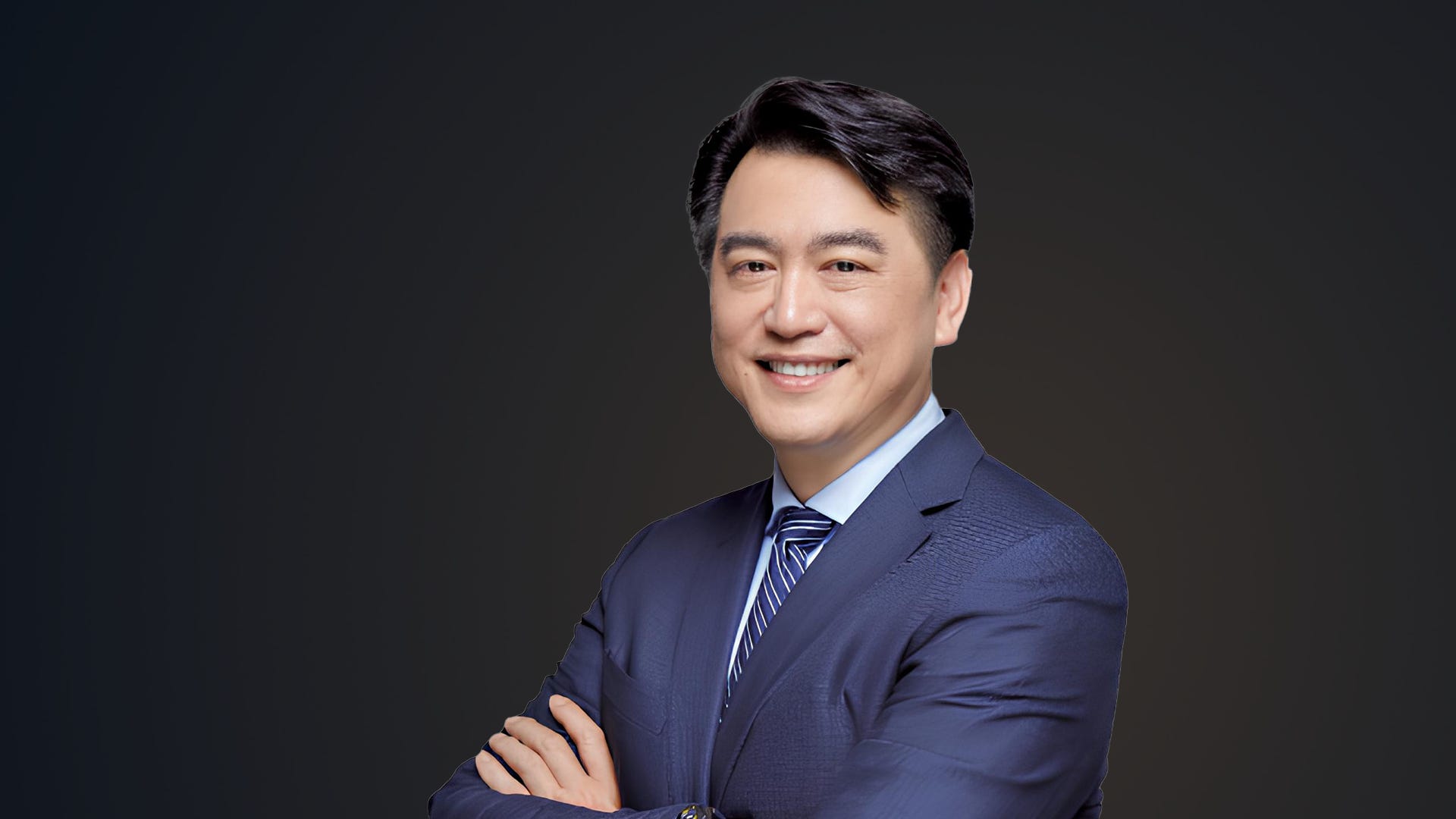
This episode of the WuBlockchain podcast features a conversation between Colin Wu and Joseph Chee, founder of Summer Capital. Chee’s career journey spans from being a young analyst in Malaysia to becoming an executive at UBS, where he worked on over 150 IPOs and more than 300 equity, equity-linked, and debt transactions, helping issuers raise over USD 25 billion.
On September 18, Helius (NASDAQ: HSDT, soon to be renamed Solana Company) completed a private equity placement to build a SOL treasury, led by Summer Capital and Pantera Capital. Chee will serve as Executive Chairman of Helius’ board, guiding the company’s next stage of strategic development.
In this podcast, Chee shares how he transitioned from traditional finance into Web3 and blockchain, and eventually became directly involved in creating a publicly listed company with a SOL treasury. He also encourages young people to go all-in on Web3 as early as possible — unless they’re already deeply involved in AI or robotics.
This transcript was generated by GPT and may contain errors. For the full conversation, please listen on Xiaoyuzhou, YouTube, or other platforms. The views expressed are those of the guest and do not represent WuBlockchain. Please comply with the laws and regulations of your jurisdiction.
YouTube:
Spotify:
Joseph Chee’s Background and Career Journey
Colin: Welcome to this episode of the WuBlockchain podcast. Recently, you’ve probably seen some news about DAT, and Joseph Chee and his firm, Summer Capital, have been involved. While some in the crypto space might not be very familiar with Summer Capital, the firm and Joseph have a significant reputation and influence in traditional industries. So, naturally, people are very interested in Joseph and his capital, especially in relation to recent developments in the crypto space. We’re grateful to have Joseph here today to share his insights.
Joseph, to start, could you briefly introduce your background? Some in the crypto industry may not know much about you. I did some research and found your career to be quite legendary. I heard you’re originally from Malaysia, and you started as a data analyst, eventually rising to become the Asia Pacific President at UBS. You’ve also been involved in massive IPOs like PetroChina. Could you share more about your past experiences?
Joseph Chee: Thank you. I’ll give a brief introduction. I’m a native of Malaysia. At 17, I went to the United States. Initially, I studied mechanical engineering, then worked for an American company for a while, before pursuing an MBA at New York University. I was lucky enough to land an interview with Citigroup on Wall Street, and spent a few years working on large mergers and acquisitions and IPO projects there. Afterward, I decided to return to Asia and joined UBS around 2000. I was fortunate to join UBS at a time when several big projects in Hong Kong were just starting.
Then, at the end of 2004 and the beginning of 2005, my boss finally agreed to let me take charge of China’s equity capital markets. I distinctly remember that at that time, the Beijing office had only a few people — literally, we could count them on one hand. China’s budget was only $20 million. Starting in 2005, we did our first H-share IPO, and by 2006, our revenue from equity capital markets reached $260 million. In 2007, it surpassed $500 million, and it continued to grow after that. Indeed, I was in the right place at the right time as China’s market was soaring. Some weeks, we even worked on seven IPOs.
Looking back now, I realize that those were incredibly rare opportunities, ones that are unlikely to happen again in the future. The financial crisis of 2008 briefly slowed things down, but by the second half of that year, the market picked up again, continuing until around 2011 and 2012. After that, many industries in China began to go global. Starting in 2014, we handled a large number of overseas acquisition projects, helping companies like Wanda, Fosun, and HNA acquire businesses globally. There were many big projects at the time. In 2017, I left UBS. By the time I left, I had been involved in over 400 projects, including more than 150 IPOs. I had helped companies raise over $250 billion in equity financing across more than 300 deals, particularly for Chinese and Asia-Pacific companies.
It was indeed a great time to be in investment banking, and the experiences I had then are vastly different from the current landscape. Afterward, I decided to venture into entrepreneurship. To be honest, I witnessed the rise of the internet bubble in the 1990s in the U.S., which was followed by a huge crash from 1998 to 2000. After the market bottomed out in 2003, the internet started to see new growth.
I’ve seen many industries go through their growth cycles — starting small, thriving, and eventually attracting global capital. In the early days, many internet companies in the 2000s couldn’t even get a bank account. No one wanted to do business with them. These companies were burning money without generating revenue, relying only on users and data.
That’s also why banks like Silicon Valley Bank emerged at the time — they specifically catered to this new industry.
Having witnessed these shifts, I’ve learned a lot and benefited greatly. I’ve also helped many people and made a lot of friends. But my only regret is that I didn’t get more deeply involved back then. I was only providing services from an investment banking perspective, and looking back, I realize I missed a lot of opportunities.
So, when I decided to start my own business in 2017, I had one clear goal in mind: to begin investing and learning, with the eventual aim of fully committing to a single company and growing it. I believe the transition from investment banking to becoming an entrepreneur is a huge leap. In investment banking, the goal is to minimize risks and raise capital, while in business, the focus shifts to how to take on risks — when to take risks and when not to. The mindset between the two is completely different.
When it comes to investing, it’s all about looking forward and striving toward a goal. For me, investment isn’t just about minimizing risk; it’s about taking responsibility during the process of a company’s growth and seeing it through to success. So, I see investing as a great transition from banking to running a business.
That’s why, starting in 2017, I began raising funds to make investments. We started investing in blockchain in 2017 and 2018. We were one of the first licensed funds in Asia to enter the space. Initially, we were quite cautious, avoiding investments in tokens, ICOs, Memecoins, and NFTs. Instead, we focused on infrastructure projects and took equity stakes in some promising companies.
By 2021, we were more confident in the long-term sustainability of blockchain and recognized that this sector, both in terms of scale and technology, was here to stay and would continue to thrive. So, after 2021, we significantly ramped up our investments and committed even more resources, keeping pace with the industry’s development. Personally, I’ve also invested a lot of time in the space alongside my team.
At this point, the members of our blockchain team are some of the most knowledgeable and active people in the crypto space, and they’ve been my mentors throughout this journey.
Now, I’ve mostly handed over the management of other fund investments to my team and am focusing on blockchain.
Blockchain as the Next Iteration of the Internet and Growing Industry Recognition
Colin: I find your experience quite unique. Why did you transition from working in traditional IPOs to the blockchain space? It seems like you’ve fully immersed yourself in Web3 companies now. Is this shift because your belief in the blockchain industry has deepened, or are there other reasons?
Joseph Chee: I see blockchain as an evolution of the internet. If you look at the development of blockchain companies and technology in the past few years, especially people’s attitudes toward it, you’ll notice that it’s very similar to what early internet companies faced.
In the past, many people had prejudices against internet companies and didn’t understand their true value. Blockchain is similar. Just a few years ago, when people talked about cryptocurrencies, many would still view it as a tool for crime or money laundering. That was the simplest way of looking at it. Even today, I believe more than half of the world still holds that view, and they don’t fully understand what blockchain technology can actually offer us.
However, about a few months ago, I noticed that at least people are starting to understand the benefits of stablecoins. The emergence of stablecoins has led people to pay more attention to this space. And as blockchain technology matures, it’s receiving more and more attention, especially from public companies and the market. Over time, I’ve seen the whole world, including Wall Street, intensifying their efforts to learn about blockchain and recognizing that its development is unstoppable.
I’d say that this year marks the beginning of blockchain policies and legislation, and it’s the first year that the public has truly started to embrace this new technology. People are becoming more open-minded about cryptocurrencies now, and they no longer view it with the same discriminatory lens as before.
Investing in Blockchain and the Transformation of Traditional Financial Institutions
Colin: I’ve noticed that your capital has invested in some relatively large companies in the past. You mentioned Swiss digital banks, as well as larger groups like Bitmain and Animoca. What are your thoughts on these investments? How have they performed?
Joseph Chee: These investments have been extremely important to me because without them, without learning from and understanding these companies, I probably wouldn’t have made the decision to invest more. These investments were a learning process for me. Each investment has been a key learning milestone, a marker in my journey. Between 2017 and 2018, we invested in Bitmain, and that was when we truly started to understand the Bitcoin mining process and how the industry operates. That was just one part of it. Later, we began focusing more on the financial services sector, especially exchanges.
We firmly believed that blockchain would play a huge role in the financial industry. Global financial assets are estimated at around $500 trillion, and this sector is still significantly underdeveloped. Many systems in banks, investment banks, and exchanges have been in place for 20 or 30 years, without any major innovations or reforms. There are two reasons for this: one is that people believe these outdated systems are fine, and the second is that stakeholders are reluctant to change the status quo.
In my investment journey, I saw areas within the banking system that needed improvement. Blockchain technology could rapidly address these issues and open up new possibilities. Especially in 2017 and 2018, I realized that excessive regulation in the financial sector, particularly after the 2008 financial crisis, had made global financial institutions much more tightly regulated, almost stifling the growth of many institutions. Many banks and securities firms had lost certain services they used to provide, and customer needs were no longer adequately met because the banks’ top priority was protecting their own interests.
What I saw was that blockchain could offer solutions to these financial institutions. It not only provides real identity information, but more importantly, it can change the way asset ownership is managed. Right now, the global financial system faces many risks, such as assets being seized or lost due to extreme circumstances. Blockchain ensures asset ownership, allowing users to retain full control over their assets at all times.
At that time, I also believed that many of the inefficiencies in traditional finance could be improved through blockchain. That’s why we began investing and set up Amina Bank in Switzerland, a fully licensed and compliant bank. Even though some people in the crypto space thought traditional banks were no longer needed, believing that having a wallet was enough to handle everything, we went through several cycles in the crypto industry and witnessed the rise and maturation of the sector. Just like in the internet era, there are inevitable regulatory issues that will always exist. Now, it’s clear that banks are crucial for the continued development of the crypto industry.
In the past two to three years, or even five years ago, there was a lot of opposition to regulation. But now, more and more people are willing to accept it. With these changes, banks have become one of the most important bridges for connecting blockchain with traditional world funds. Today, Amina Bank is operating smoothly, its asset scale is growing rapidly, and everything is going very well.
Looking back at some of the past investment projects, I feel they each have their unique features. But these investments aren’t my personal achievement; they’re more of the team’s hard work. It’s the team that identified these projects. I just reviewed and made the final investment decisions. For me, every project is an opportunity to learn, and this has given me the confidence to continue investing my time, energy, and capital in this space.
The Creation of the DAT Project and Investment Model
Colin: Joseph, could you give us a detailed introduction to your new venture, Helius — a treasury company based on Solana? I understand you’re one of the key leaders in this project, and Leon Li’s family office has also joined. Can you tell us when the discussions began and how the project came to life?
Joseph Chee: To be honest, the concept of DAT was officially introduced in May. Before that, we didn’t call it DAT. Initially, we thought it would be a financial advisory company, similar to something like MicroStrategy. It wasn’t until around April or May that the idea of a company solely focused on storing Bitcoin emerged. Some companies had been accumulating Bitcoin, and others used Bitcoin as part of their business, but it wasn’t until April and May of this year that companies fully dedicated to a single cryptocurrency, like DAT, started to emerge.
In Asia, the earliest pure DAT company was led by the BTC Magazine team, who established DAT companies in Hong Kong, Japan, and the U.S. To be honest, I didn’t initially understand it and wasn’t interested. I thought it was just about a public company buying Bitcoin. But by May and June, I started to take a deeper look at some of the U.S.-based DAT companies. After reviewing their projects and hearing their investment proposals, I gradually realized that DAT actually provides a much better way for large hedge funds and retail investors worldwide to gain exposure to crypto investments.
You might wonder, why not just buy Bitcoin directly? Well, if you buy Bitcoin directly, the price fluctuations are tied directly to the asset. You could also invest in an ETF to amplify returns, which is a good option. But DAT has a unique advantage: it doesn’t just give investors exposure to Bitcoin. It uses a more flexible model to secure cheap capital, capture market opportunities, operate efficiently, and provide investors with higher returns and more convenient investment products.
As I started to understand DAT’s core advantages, I realized it was more attractive than just buying Bitcoin or investing in an ETF. First, the design of DAT products allows them to offer investment opportunities to larger funds, driving the price of the underlying cryptocurrency up and increasing liquidity. The most abundant funds are on Wall Street, and many funds are already trillion-dollar entities, with countless fund managers beneath them. These managers don’t want to manage wallets themselves, nor do they want to deal with the operational and security risks of buying Bitcoin and making trades. DAT provides a simpler and safer way for them to access the crypto market while avoiding these risks.
I’ve had close relationships with some major crypto funds on Wall Street, and after deep research, we decided the best way was to invest through a small company to purchase crypto, and once the stock value increases, start raising funds to purchase more crypto, creating a virtuous cycle of funding. This process is highly efficient for the company and maximizes returns for investors. It took me about a month to fully understand the entire model.
As for why we chose Solana, after finishing the Amina Bank board meeting in Switzerland in June, I met with senior members of the Solana Foundation and mentioned the rise of the DAT project. I tried to convince them to officially support the Solana DAT project. I believed it was a great tool to help promote the Solana ecosystem globally, tell its story clearly, and provide Wall Street investors with the best investment channel.
At the time, they were a bit neutral, believing they shouldn’t support any specific party. However, I thought if they didn’t support these projects and they performed poorly, the Solana brand would be affected. So, I kept pushing the initiative, and by mid-July, we reached a consensus.
In the early stages, I also discussed with the team whether we should start with Ethereum. At that time, Ethereum had lower recognition on Wall Street compared to Bitcoin, and its price had not gained much momentum. But just a few days after I raised the idea, the market saw the launch of Joseph Lubin’s Sharplink, and the stock price surged. Clearly, we missed that opportunity.
I remember when I arrived in the U.S., I saw Tom Lee’s BMNR make an announcement, and the stock price exploded, raising billions of dollars. Related stocks were skyrocketing. During those two months, many crypto funds made a lot of money. SoftBank and Tether also launched the largest Bitcoin SPAC at that time, and once the announcement was made, the SPAC’s price tripled. During that period, global stock market recognition of cryptocurrencies reached new heights.
I realized that Wall Street funds wanted to enter the crypto market in an efficient way — they just didn’t know how to operate and needed a proper channel. As I mentioned before, buying Bitcoin directly or investing via an ETF is not convenient. The DAT model is more efficient, especially when the company has liquidity and good stock performance, allowing it to use various financial tools to accumulate more crypto assets at a lower cost, making it more efficient than buying with cash.
Afterward, we focused on Solana. I’ve always believed that, despite Solana’s challenges due to issues with FTX, it remains one of the most efficient, profitable, and cost-effective technologies among all blockchain platforms. Its high-tech nature convinced me that Solana is the most worthy L1 crypto asset to invest in. So, we reached out to Pantera, the largest crypto-focused fund in the U.S., to push the Solana project forward. Pantera was very bullish on Solana, and it had already made Solana its largest position, but they were eager to increase their investment. Eventually, the Solana Foundation agreed to support our joint proposal.
On July 25, we had our first discussion with the Solana Foundation about the Solana DAT proposal, and by August 10, we confirmed the joint initiative. On September 15, we successfully completed the issuance. The process was incredibly fast — only one month from initiation to public announcement, making it the quickest DAT project launch. I learned a lot during this process, especially regarding the design of the project’s scale, structure, and strategy. We realized that the scale of DAT should not be too large, as it would affect the returns of the first investors and the liquidity in the market. We balanced scale with investment goals to ensure the project would grow steadily while remaining flexible. The issuance was a huge success, and now, as Executive Chairman, I’m managing the company. As the company grows, new board members and management will join us to help operate the business.
Views on the Future of Successful Blockchain Companies and the Competitive Landscape
Colin: While DAT is very popular at this stage, historically, it seems that successful companies have been rare, with MicroStrategy being one of the few. What’s your view on whether more successful companies like this will emerge in the future? Do you think MicroStrategy’s model can be replicated? Additionally, many people believe that in some cryptocurrency sectors, there may only be one winner in the end, with the largest cryptocurrency becoming dominant throughout the entire cycle. What are your thoughts on these issues?
Joseph Chee: On the first question, I see it like the early 2000s, when foreign investors first started entering the Chinese market. At that time, investors were new to China and faced companies like China Mobile, China Telecom, and PetroChina. The information wasn’t fully transparent, and government policies and regulations weren’t clearly defined. Investors didn’t know what to invest in, and much of the information wasn’t comprehensive. If someone had said back then that PetroChina was the top company in China with no competition, that would likely have been a wrong judgment.
Right now, blockchain is in a similar stage. When people first heard about crypto and blockchain, they started by buying some Bitcoin to figure out what it was all about. After a while, they understood Bitcoin, and then began to explore Ethereum, Solana, and others. We’re still in the exploration phase. As technology and the market mature, I believe there won’t be just one successful company. Bitcoin and Ethereum each represent different values. Bitcoin is like digital gold — it represents store of value, and its value lies more in long-term investment. Ethereum represents a huge ecosystem where people can build their own applications and ecosystems.
In the future, more capital will flow into this space, looking for various ways and opportunities to participate. There will be many large blockchain projects, each representing different market demands and industry applications, offering investors choices. Therefore, I don’t believe there will only be one winner in the future. The blockchain space will have multiple successful projects, and this is just the natural process of diversification.
Additionally, while MicroStrategy is the most well-known company, it won’t be the only representative. Financial centers like the U.S., China, Singapore, Switzerland, and the U.K. each have their own characteristics. Investors in different regions will be more inclined to invest in markets, projects, and management teams they trust. So, I don’t think the success of Bitcoin DAT companies will only be represented by MicroStrategy. Other Bitcoin DAT companies can also be successful.
As for Bitcoin, while it is currently the most representative cryptocurrency, I believe more large tokens and cryptocurrencies will emerge in the future, and even some large companies may issue their own tokens and participate in the crypto economy. As a result, the number of DAT companies will increase, and the world of blockchain is just getting started.
A lot of people ask, does this mean that blockchain has already ended? I believe this is just the beginning.
Views on Future Token Investments and Current Company Focus
Colin: Will you and your capital participate in other token DAT projects in the future, or will you focus solely on your current company and its existing business?
Joseph Chee: Right now, as Executive Chairman, I absolutely have to focus all my efforts on the Solana DAT project. This is a highly competitive space, and there are several companies of a similar scale around us. We believe our advantage lies in our background in traditional finance, particularly with a team that includes many professionals from Wall Street. Our partner, Pantera, also has a strong background. Their founders and leadership come from Tiger Management, and they’ve been investing in crypto since 2013, even purchasing Bitcoin in their first fund at an average price of $65.
Having worked in Wall Street for many years, we believe we are better equipped than others to communicate with the market, maintain a premium, and leverage that premium to raise capital at the lowest cost, ultimately generating the highest returns for our shareholders.
In the long term, as long as we can maintain the ability to acquire funds at low cost and continue to operate efficiently, we should become a leader in the industry, becoming the “MicroStrategy” of this sector.
As for other token investments, we won’t completely rule them out. But for now, the focus is on executing the Solana project. It’s already a huge undertaking, and in the coming years, we will concentrate on making it stronger and more successful.
Competitive Advantage of the Solana DAT Project
Colin: Could you elaborate on what you think sets your Solana DAT project apart from others? There are several Solana-based DAT projects in the market; what do you believe distinguishes yours and gives it an edge?
Joseph Chee: In the Solana DAT space, our premium is actually the highest, which proves that the cost of raising capital through stock financing is the lowest. Our performance has already been recognized by the market. There are many key factors in our structure that I think people might have overlooked. First, the scale we designed is already very mature. Secondly, even though market conditions weren’t ideal during our issuance, we successfully oversubscribed and achieved our targets.
Most of our investors are institutional investors, especially many traditional Wall Street funds. The support from traditional funds is critical for us because their backing and long-term capital investment provide more stability than support from some cryptocurrency funds. Therefore, the quality of our investors in the issuance structure is very high.
During the issuance process, you might not have noticed, but from day one, we started promoting through major media outlets. Our news aired during CNBC’s 8 PM slot, which reached investors and fund managers across the U.S., making our trading day very smooth. In the following days, major media outlets like Bloomberg also began reporting on us, highlighting how we differed from other competitors.
This gave us significant exposure in the major media outlets of Wall Street. From day one, we received important media coverage, showing that our project had broad recognition. We believe that in the future, Wall Street media and global media will continue to support us.
From the perspective of stock trading liquidity and premium, we are confident that this advantage will continue. Additionally, we have some strategic plans in place, though I can’t reveal all the details right now. But I can assure you that we will showcase more advantages and competitiveness in the future, and you will see the specific measures we are taking.
Thoughts on RWA and Blockchain
Colin: I’ve noticed that you’ve been paying a lot of attention to RWA (Real-World Assets) in recent years, especially with the recent surge in Hong Kong and Mainland China. Do you have any new thoughts or changes regarding RWA? And for investors who are interested, do you think there are any good opportunities right now?
Joseph Chee: I believe the relationship between DAT and RWA is complementary. DAT provides traditional Wall Street investors with a way to enter the cryptocurrency space, while RWA offers crypto investors a way to enter the traditional financial world. Through RWA, we can transform important assets from the traditional world into tradeable digital currencies, and the potential in this space is vast.
I’ve always believed that the RWA sector holds tremendous potential, which is something I often feel regretful about. In the blockchain and cryptocurrency space, most of the leaders are young, fast-moving, knowledgeable, and well-resourced. Meanwhile, those of us who are older, despite having experience, have been a bit slower in this area.
However, I think RWA is an area where we “older folks” can still play a significant role. RWA involves real-world physical assets and is closely tied to law, regulations, and custody — areas where we with traditional financial experience excel. While blockchain’s strength lies in its technology, particularly in data centers, electricity, and internet integration, we can still contribute our expertise to this field, learning and growing along the way.
Advice for Young Entrepreneurs
Colin: Lastly, I’d like to ask you a question. You’ve worked your way up from the bottom in traditional industries, entered the cryptocurrency space, and now play a key role in a major company. Based on your life experience, do you have any advice for young people or young entrepreneurs today?
Joseph Chee: My advice to young people is this: unless you’re working in AI or some other high-tech, automated, or robotics field, you should seriously consider going all-in on blockchain. Blockchain is developing very rapidly right now and is an important direction for the future. I saw many opportunities in the past, but because I didn’t have enough courage, I missed out on them. So, I think young people today should take that step sooner rather than later — don’t hesitate.
Colin: Thank you so much, Joseph, for taking the time to share with us. We look forward to seeing more developments from your company and hearing from you again in the future. Thank you.
Joseph Chee: Thank you, and I wish everyone all the best.
Follow us
Twitter: https://twitter.com/WuBlockchain
Telegram: https://t.me/wublockchainenglish