
Interview with BitMart CEO Nenter: Exchanges Shifting to Financial Infrastructure

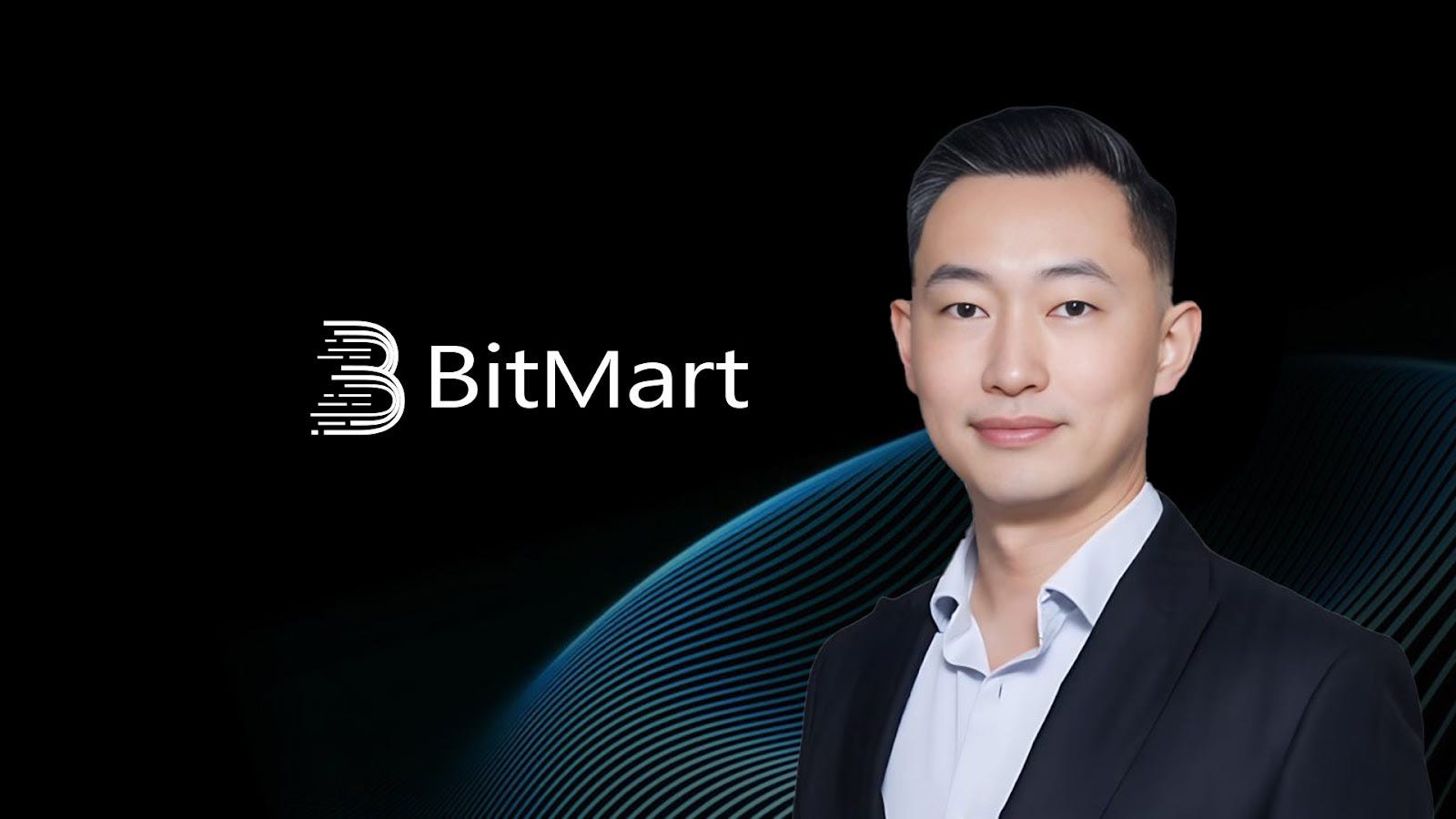
This interview delves into the evolution of BitMart and the broader cryptocurrency industry. Nenter Chow, Global CEO of BitMart, shares his journey from traditional finance to Web3, emphasizing the market’s shift from pure speculation to fundamental utility and real financial plumbing. Key topics include BitMart’s strategic focus on omni-asset access, including RWAs and US equities, global compliance with operations in 50 US states, and user education through initiatives like the UNICEF partnership. The discussion also covers the integration of AI in internal operations such as audits and surveillance, the growing convergence between traditional finance and crypto, career advice for those entering Web3, and an honest assessment of the current sell pressure and future opportunities in the crypto venture capital landscape.
The audio transcription is done by AI and may contain errors.Please listen to the full podcast on Spotify, YouTube, and other platforms.
YouTube:
Spotify:
From Traditional Finance to Web3
Colin: Welcome to WuBlockchain Podcast. Can you introduce yourself first to our audience?
Nenter: Thank you so much for having me, Colin. My name is Nenter. I am currently the global CEO of BitMart Exchange. We have been around for just about 8 years now. Prior to my role at BitMart, I was a partner at Animoca’s venture fund here in Hong Kong. Prior to that, I spent about 17 and a half years in traditional finance, mostly as a leveraged finance and cross-border M&A banker. Very pleased to be here, Colin.
Colin: You mentioned that you worked 17 years in global banks and also as a partner at Animoca. Animoca is a very influential crypto venture in Hong Kong. When you joined BitMart as a global crypto exchange, what is the difference from traditional banks and crypto ventures?
Nenter: My Wall Street years were really the foundation of my knowledge, and they taught me how capital moves through capital markets, risk committees, and cross-border balance sheets. It is very much a traditional way of thinking. Now on the Web3 side, joining as a partner at Animoca Ventures really forced me to think more in terms of 24/7 markets, faster iteration across just about everything, and thinking more in terms of community building and ecosystem building. Those are some of the key differences. In a nutshell, it is really more about cross-collaboration in Web3 versus traditional markets.
BitMart’s Evolution and the Shift Toward Utility
Colin: We know BitMart has an 8-year history. It is actually not a new exchange and it has a lot of users. When you joined the company, what did you think was the biggest challenge or what did you want to do?
Nenter: I think over the past eight years, BitMart has evolved from a pure trading venue into much more of an infrastructure for financial freedom as it is today. We have shifted from just listing tokens to building an omni-asset platform that supports everything from spot and derivatives trading to yields and RWAs as well. For us, the biggest internal shift has really been cultural. We think much less in terms of what the next hot token is to launch, and more in terms of risk, compliance, and education. Those items are the core products that determine whether or not users can trust us in the long term.
Across the industry, the biggest change, which I wouldn’t call a challenge but a move towards positivity, is that we have moved beyond just speculation to utility. This is largely driven by institutional adoption, clear regulations, and the rise of stablecoins and tokenization as real financial plumbing versus just experiments. To me, all of this is positive because the biggest challenge in our industry has been the bad actors and the heavy speculation that drains a lot of good capital out of the system. Right now things are looking more hopeful because we are being judged on whether or not the industry can deliver more inclusive and interoperable finance at scale, and not just speculative price action.
Market Maturation and the Shift Towards Fundamental Value
Colin: This year the industry changed a lot. For example, the altcoins and ICOs, most of them are dead. But people are trading on exchanges for gold, oil, or American stocks. It is quite different this year. What do you think? You worked for a traditional bank and you also worked for a crypto venture. What do you think about this big change this year?
Nenter: In general, this is really a sign of market participants maturing. When you look back at the last cycle, everyone was chasing DeFi summer, NFT summer, then DeFi 2.0, and a lot of those had Ponzi economics associated with them. We are at a stage now where market participants have lost a considerable amount of money through a lot of these extractive token launches. They have learned that when making an investment, you really need to have some underlying value accrual associated with it. To me, that is a positive because ultimately, when you look back at the value proposition of the earliest token, which is Bitcoin, it is really about hedging against the current fiat monetary system and preserving the value of your savings.
In a sense, crypto has always been somewhat financially driven, and that is not necessarily a bad thing. It is just whether now, when you are looking at going down the risk spectrum and making investments, you want to start thinking about what type of value actually accrues to the token. This is why some may say right now there is a revenue meta, but I do not necessarily believe this is a meta. I believe it is here to stay because it is very difficult for an investor to understand how value is captured and go back to just purely speculative assets. This is not to say that there is no room for certain hype coins to exist in the future, but I do believe that for the most part, it is going to be about how you put your money into different asset classes. That is why investors now are educating themselves more on how commodity cycles work, the different sectors within US equities, and the correlations between stocks and bonds and how they move. I think this is all a positive for the industry.
BitMart’s Unique Position and Key Differentiators
Colin: We know BitMart has an 8-year history, and now there are also a lot of crypto exchanges. Can you describe the difference between BitMart and other exchanges?
Nenter: Sure, that is a great question. For us, we really position BitMart as a user-friendly front door into a layered financial system that combines the strengths of CeFi, DeFi, and traditional markets. What that means is that we are not trying to win by having the loudest meme coin calendar. Instead, we are trying to position ourselves and win by being the most reliable place for everyday users and institutions to access financial products safely.
Our differentiation bets are categorized into three areas. First is omni-asset access. That means letting users move between crypto, RWAs, yield products, and more, all in one coherent, easy-to-use experience. The second is education and inclusion through BitMart Academy and our youth programs, which really help users build real financial capability rather than just trading behaviors. The third is a deeper focus on compliance and risk structure. As regulations harden globally, we are already operating at that standard. This is something that is very important. I am not sure if you have seen, but BitMart’s separate US entity just received the ability to operate in all fifty states in the US. That is a very big accomplishment for us, and we are looking to expand on that.
US Market Strategy and Global Expansion
Colin: You mentioned that BitMart US now works legally in all fifty states. Why did you decide to join the US market now, and what is the roadmap in the US in the future? We also know the Trump administration is very friendly to crypto. But if the American government changes, will it make the crypto industry negative in the future?
Nenter: Well, to answer the second part of your question, that is always going to be a risk. At the same time, I do believe that regulators understand that crypto and blockchain are becoming a core part of financial infrastructure, and that is very hard to replace. The efficiency of it makes it a pretty strong value proposition for most industries.
The US, for us, is a core but not necessarily an exclusive pillar of our strategy. At the end of the day, it is where much of the regulatory playbook for the rest of the world is being written, especially around stablecoins, custody, and tokenization. Being compliant in all 50 states is less about being able to brag, but more about proving that BitMart’s infrastructure can meet the highest standards so that we can then export these practices globally.
At the same time, our growth engine remains truly global. Right now, we serve users in over 180 countries, and some of the most exciting demand is actually coming from emerging or frontier markets where there are very large access gaps. The real goal is to make BitMart a true bridge. That means letting capital, products, and talent flow between mature markets like the US and high-growth regions like CIS, LATAM, Asia, and so on.
BitMart’s Roadmap: TradFi Expansion and Financial Education
Colin: Following up on our last question, can you introduce to our audience the most important focus this year for BitMart? Also, can you share the roadmap for BitMart over the next two or three years?
Nenter: Sure. For us, obviously on the product side, I mentioned before that we continue to expand our TradFi offerings and product offerings because we want to become the everything app for RWAs. I think that continues to grow. Right now, we have over 100 individual US equity pairs. We have about 17 global indices. We have multiple commodities pairs as well, so that will continue to expand.
One of the key issues we are trying to solve, and it is going to be a big focus, is education and inclusion. We are solving real problems for real people because a lot of the industry has taken a very extractive approach. We are not trying to do that. For the average user, the real problem isn’t how to buy their first token. It is really about how to build a lasting, financially resilient structure in a digital and volatile world. That is why we started partnering with organizations such as UNICEF on their Passport to Earning initiative to focus on helping the youth build real digital finance skills, employability, and closing gender gaps in mobile and internet usage, rather than just focusing on trading tutorials. For us, this is a pretty important focus. We are designing these education programs to make sure that they, A, reduce information asymmetry; B, measurably improve outcomes like income or access; and C, are product-agnostic when they need to be. If the answer is no to any of those three, we won’t ship the product, even if it might drive short-term volume. For me, BitMart needs to be a partner in people’s long-term financial journeys and not necessarily just their first trade.
The Role of AI in BitMart’s Operations
Colin: We know a lot of crypto companies are trying to use AI technology for their company management. Has BitMart done something with AI, either inside the company or externally?
Nenter: I think AI is very important right now, not just for BitMart, but for every company across different sectors for operational efficiency and to significantly amplify everyone’s work. We believe that AI and data work need to be a core focus, whether in surveillance, anomaly detection, liquidity monitoring, or user protection tooling, and not just marketing automation. The irony is that some of these unsexy disciplines like internal controls and audits are exactly the type of use cases that AI can be utilized for to unlock the next wave of institutional trust and adoption. For us, this is a core initiative this year, and we are going to continue expanding the use of AI as it relates to every part of our business.
Partnerships with Traditional Finance and Wall Street
Colin: I suddenly have a question. We know BitMart is exploring the US market. We also saw the news about the OKX investment. Do you think this is a very good cooperation between the traditional financial industry, Wall Street, and crypto? Also, will BitMart do more cooperation with Wall Street in the future or even seek investment from big Wall Street giants?
Nenter: That is a great question. I view OKX’s investment from a traditional finance powerhouse as a huge positive for the entire industry because it really shows the convergence of TradFi and our markets, and I think this is going to continue to happen. It is very encouraging. At the moment, we are not necessarily looking for external capital, but being able to partner in some capacity with TradFi players is very important. If you take a look at the most recent news about Kraken and NASDAQ, I think that it is also very positive to team up on tokenized equity products. Going forward, you are going to see more and more of these partnerships, collaborations, and investments in whatever shape and form. We are very much open to that sort of participation as well.
Market Outlook and Navigating Volatility
Colin: Let’s go back to this year. This year, in the global financial system or the crypto industry, no one can really say if it will be a bear market or a bull market. What do you think? Regarding BitMart, will your team maintain a positive approach to exploring all business opportunities, or will your team be more careful because many people are predicting an upcoming bear market?
Nenter: That is a great question. To take a step back, in 2025, we had a record year. That is a huge thanks to the entire BitMart team on every level. I really think Sheldon, our founder, has built out a great team. Over the last year, we were able to take things to the next level across multiple fronts on the product side and the market side. We are actually very hopeful for 2026 for BitMart’s global business as a whole.
I understand right now we are in a classic place where price volatility is masking a much more important structural shift. When prices are down, it is always a bit tough and puts a bit of strain on a lot of market participants. However, crypto assets are being integrated into real regulatory frameworks, balance sheets, and payment systems, and that transition is a huge positive. I think the pullback on the surface is really masking just how many fundamentally positive things are happening underneath. This is part of the hard work of turning an asset class from speculative to systemic.
To me, the markets will be the markets. There are always going to be ebbs and flows, peaks and valleys. Ultimately, I cannot say for the short term, in the next few weeks, months, or even half a year. But for us, we really take a much longer view and approach to the market, so we are very hopeful.
Shifting from Traditional Finance to Web3
Colin: I also have a question about how you worked for traditional banks for many years. Why did you choose to move from the traditional industry to crypto? Also, do you have any words for other people if they want to shift their career from the traditional industry to crypto?
Nenter: For me, the main reason I shifted from TradFi to Web3 is really about building a better and more inclusive financial system. I think for most parts of the world, people are locked out of the banking system. They can’t open a bank account or easily make even a simple payment for that matter.
Web3 is really about providing everyone with equal access and building a more equitable society. That is what I truly believe because ultimately, it can’t just be all about the money. You have to be doing something for society, and I think Web3 is a good combination of both of those to really help build the next evolution of a better financial infrastructure. So that is the main reason I shifted from TradFi to Web3.
Today, there is a lot of interest from people in traditional finance who want to join Web3. The advice I always give for those who want to shift over is that when I joined Web3, there were a lot less publicly available resources to learn and to get involved. You really had to be a self-motivator and a self-starter. Fast forward to today, there are a lot of opportunities across multiple parts of the value chain across the industry. But having said that, I still believe that having the curiosity to learn, being able to network, joining different communities, and meeting different market participants certainly helped me a lot in my journey from TradFi into Web3. At the end of the day, community is still a very key part of the Web3 ethos. I believe that being active and contributing in different ways to various communities is always a very helpful way to get into the industry.
Hiring Criteria and the Web3 Mindset
Colin: So my final question is, if someone wants to apply for a job at BitMart, or you want to hire some people, what do you think is most important? And also, if someone is just a student in university and wants to apply for a BitMart job, what is the most important talent you want to see?
Nenter: I believe there are both hard skills and soft skills. For us, we have job openings across a variety of different departments, whether it is marketing, finance, business development, or if you have a more technical background on some of the technical product teams. It really spans across the board. So from a hard skill set perspective, that may differ based on positions.
From a soft skill perspective, I think a very eager, proactive approach to learning is needed. One of the nuances of Web3 is that it is truly 24/7, and I can tell you firsthand that I am usually 24/7. I do think that anyone who wants to come into the industry should, A, have a passion for it, and B, have the desire to learn as much as they can and really expect that 24/7 type of schedule. As they say, we are living in dog years, so a year in crypto or Web3 can be like seven years. I think just being prepared for that and having the right mindset is very important.
The State and Future of Crypto Venture Capital
Colin: I suddenly have another question I want to ask you. I think centralized exchanges are becoming more like super financial applications now, because maybe in the future people can trade everything on a centralized exchange. But regarding crypto venture capital, since you also worked for Animoca before, is crypto venture dead now? Especially in Hong Kong or America, there are a lot of people or funds that want to do crypto ventures. What is your advice?
Nenter: That is a great question, and believe it or not, it is the one I get the most. Right now is definitely a very difficult period for crypto venture because the legacy venture funds that raised in 2020 and 2021 are effectively in the process of recouping their investments. There is a lot of selling activity, and I believe this will continue to persist, which is why you are seeing so much sell pressure across various altcoins, especially the VC-backed ones. Fortunately for fundraising, there are some larger funds that were able to successfully do so, albeit not at the levels seen a couple of years ago. So you definitely have less capital to go around.
The other part is that there was a heavy concentration of venture capital raised for early-stage growth projects. Now, when you are raising for a venture fund, it is usually multi-strategy. It is not purely a venture alone; you also need a liquid strategy. I also think they are more concentrated on capital markets or strategic acquisition exits. So you are looking at Series B and beyond, which is a slightly later stage.
Overall, I do not believe it is dead. It is a tough period, but at the same time, it is all for the better because over time, the projects that were not structured correctly will go away.
I am also very hopeful because there are a lot of new founders and new project teams building with more transparency. They are building in a way that is not just optimizing for a token launch exit, but really building a real viable business with sustainable revenue metrics. So I am actually very hopeful and definitely looking forward to the new iteration of projects to come.
Disclaimer
The statements or opinions expressed in this event are those of the author(s) and do not necessarily reflect the views of BitMart or its affiliates, and shall not be considered professional financial investment advice.
All crypto investments are highly speculative in nature and involve substantial risk of loss. Past, hypothetical, or simulated performance is not necessarily indicative of future results. The value of digital currencies can go up or down and there can be a substantial risk in buying, selling, holding, or trading digital currencies. You should carefully consider whether trading or holding digital currencies is suitable for you based on your personal investment objectives, financial circumstances, and risk tolerance. BitMart does not provide any investment, legal or tax advice.
Follow us
Twitter: https://twitter.com/WuBlockchain
Telegram: https://t.me/wublockchainenglish