
Michael Saylor's Miami Speech: Using Bitcoin Volatility to Create "Digital Credit" That Bridges TradFi and DeFi

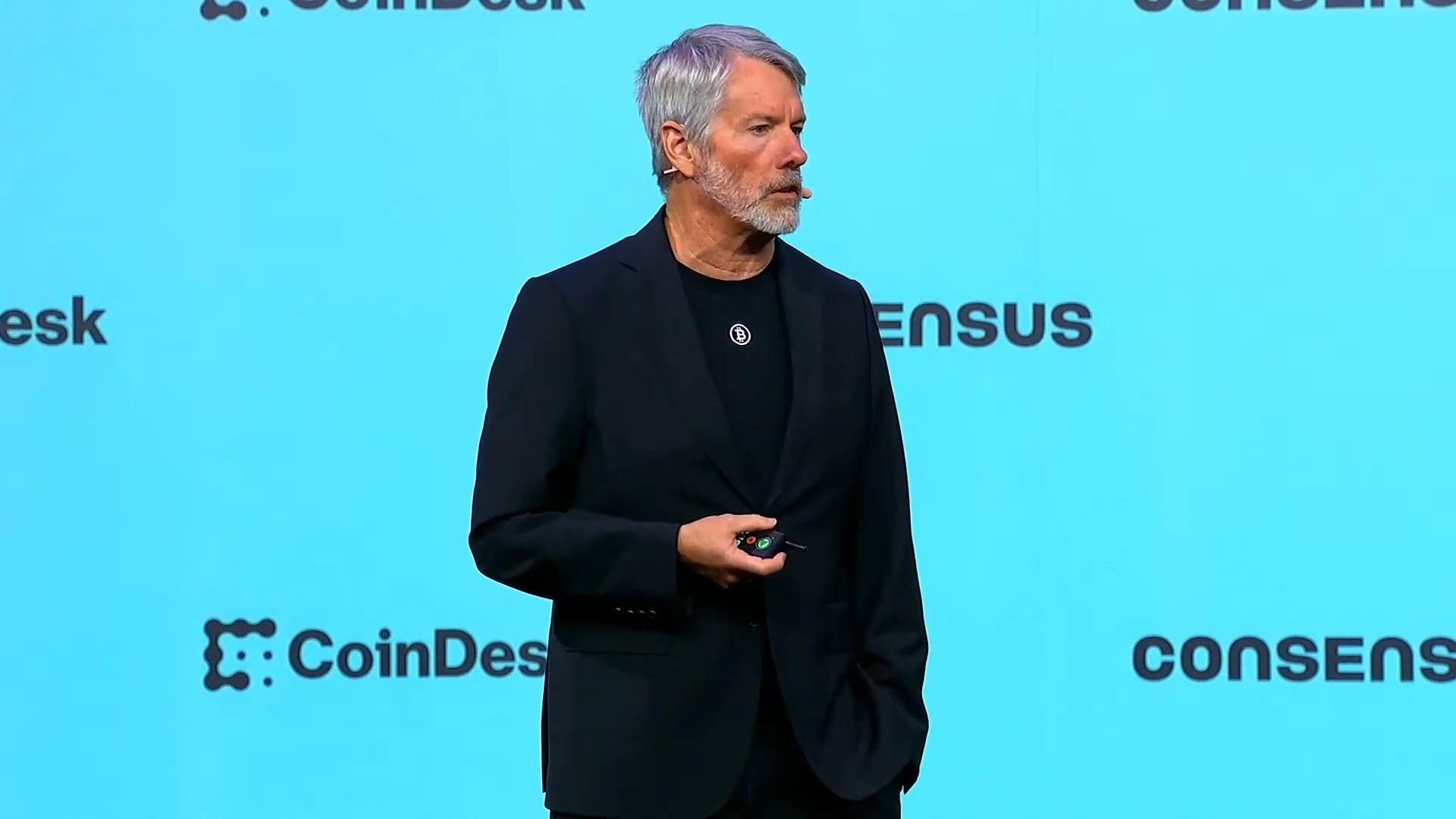
This article is based on a speech by Michael Saylor, founder and Executive Chairman of Strategy, at Consensus Miami 2026, centered on the idea of digital credit.
Michael argues that digital credit is Bitcoin’s next major financial use case. By using Bitcoin’s long-term capital appreciation as the underlying capital base, products like STRC aim to convert volatile, non-yielding digital capital into liquid, lower-volatility, yield-bearing credit instruments. STRC is positioned as a bridge between Bitcoin, traditional finance, stablecoins, and DeFi, offering investors exposure to Bitcoin-linked yield without directly holding Bitcoin’s full volatility. In the long run, Michael sees digital credit as the foundation for a new layer of digital money and digital yield products.
The audio transcription and translation were completed by GPT and may contain errors.
Digital Credit: Turning Bitcoin Appreciation Into Yield
Michael’s core argument is that digital credit is built on digital capital, with Bitcoin serving as the underlying capital base. Bitcoin has historically outperformed major assets such as equities and gold, but its volatility and lack of cash flow make it difficult for many mainstream investors to hold directly.
Digital credit attempts to solve this problem by converting part of Bitcoin’s long-term capital appreciation into credit yield. Instead of using Bitcoin only as collateral, Strategy aims to use its large equity base and access to public markets to issue credit products that traditional investors can buy.
In this framework, Bitcoin’s “killer app” may be digital credit: transforming a volatile, non-yielding asset into scalable yield products for traditional capital markets.
From Volatile Capital to Structured Credit
The purpose of digital credit is to separate different investor needs. Bitcoin offers long-term upside but comes with high volatility. MSTR common stock provides leveraged Bitcoin exposure. STRC, by contrast, is designed as Bitcoin-linked credit: lower volatility, income-oriented, and more suitable for investors who need liquidity or steady yield.
Michael compares this process to refining crude oil into fuel. Bitcoin may carry 30% to 40% volatility, while digital credit aims to extract a smoother yield stream from that volatility. The upside and volatility are absorbed by the equity side, while credit investors receive a more stable income product.
STRC combines several features: a public company structure, Bitcoin as digital capital, listed preferred stock, monthly floating dividends, return-of-capital tax treatment, and active management. The result is intended to be a liquid credit product with double-digit yield potential, tax deferral, lower volatility, and stronger principal protection.
Why STRC Appeals to the Market
STRC’s appeal lies in its yield, liquidity, and risk-adjusted return profile. Michael argues that while money market funds yield around 3.5% and private credit around 8.5%, STRC offers roughly 11.5% to retail investors. For some U.S. taxpayers, the after-tax equivalent yield may be higher.
Because STRC has relatively low volatility and trades through mainstream brokerage channels, it can attract investors who may not want to buy Bitcoin directly. It is positioned as a liquid, transparent, fee-free alternative to more complex credit or hedge fund strategies.
Michael also frames STRC as a potential crypto-native risk-free rate: a market-based yield benchmark for the digital asset economy. Its liquidity and yield profile could support carry trades and broader credit-market adoption.
Digital Credit as Fuel for Digital Money and Yield
The next layer, according to Michael, is digital money and digital yield. Money should have near-zero volatility, daily liquidity, and ideally some yield. Digital yield products may have slightly more volatility, but they should remain liquid and income-generating.
STRC could be repackaged into multiple products, including tokenized yield instruments, private funds, public funds, bank products, or exchange-distributed products. For example, builders could create lower-yield zero-volatility products, mid-yield liquid products, or higher-yield products using leverage or lockups.
The stablecoin market is a major opportunity. Stablecoins provide liquidity and price stability, but generally lack sustainable yield. Crypto-native yield often depends on bull-market activity, while Treasury-based yield offers limited spread. STRC, by contrast, could provide an external source of yield. If investors can borrow at around 3.5% and earn around 11.5%, the 800-basis-point spread can be used to support new digital yield products.
In this sense, STRC is presented as an external “energy source” for DeFi and digital assets.
Connecting Bitcoin, TradFi, and DeFi
Michael emphasizes that STRC is supported by an equity buffer and is actively managed to stay near par. Strategy can raise equity, buy cash assets, adjust dividends, and manage issuance dynamically.
Transparency is also central to the model. As a public company, Strategy discloses capital levels, pricing, risk data, and credit models, allowing investors to assess the credit risk directly.
The broader structure is:
Bitcoin is the digital capital layer. STRC is the digital credit layer. Digital money and digital yield products form the next application layer.
This creates a bridge between Bitcoin, traditional finance, crypto, and DeFi. Stablecoins provide zero-volatility money, but yield-bearing tokens could offer money-like products with income. These products could be denominated in dollars, euros, yen, or other currencies, with different combinations of volatility, liquidity, and yield.
Long-Term Vision
Michael’s goal is to scale STRC into a $100 billion AUM instrument with deep daily liquidity and volatility close to money-market levels. Once that base exists, DeFi and crypto builders could create many digital money and digital yield products on top of it.
For the crypto industry, the opportunity is to build proprietary yield products with meaningful economics, rather than competing only on low-fee ETFs or endogenous DeFi yields.
Ultimately, digital credit is positioned as a way to align Bitcoin, crypto, DeFi, and traditional finance. By turning Bitcoin’s capital appreciation into structured yield, it could become a foundational layer for the next stage of digital asset growth.
Follow us
Twitter: https://twitter.com/WuBlockchain
Telegram: https://t.me/wublockchainenglish