
WuBlockchain Space: Will Hard Assets, Shipping, and AI Be the Next Big Trade Amid the U.S.-Iran Conflict?

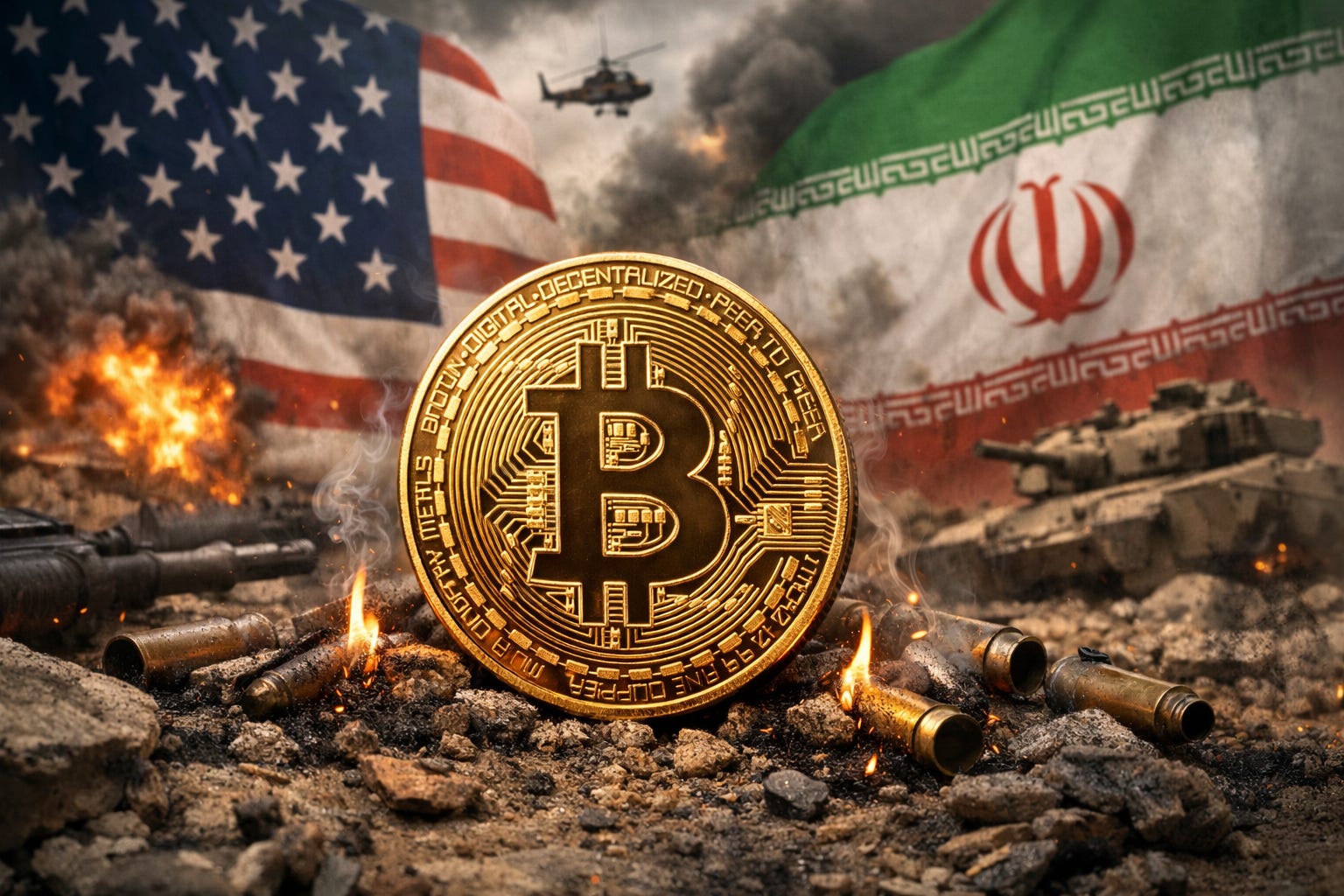
This episode of WuBlockchain Space focused on one core question: after the U.S.-Iran conflict intensified, what exactly is the market pricing in? The guests include secondary market researcher Minta, frontier tech investor didier, and macro hedge fund PM Griffin Ardern. The discussion argued that the market is shifting from trading a “short-term geopolitical shock” to pricing in a “long-term conflict.” Moves in crude oil, shipping insurance, end-market commodity prices, and even some central bank policy shifts suggest that the impact of war is already filtering into global supply chains and inflation expectations. Based on that, both guests believe the real opportunity going forward is not just a one-off flight to safety, but the repricing of resources, transport capacity, and payment/trading channels.
On the asset side, the discussion centered on several key themes. First, hard assets such as Bitcoin, gold, and copper. Some capital is once again treating Bitcoin as an “escape asset” in a wartime environment, though its short-term upside still appears to be driven more by liquidity and speculation. Second, resource-linked sectors such as copper, energy, mining, oil tankers, and shipping, with the core thesis being that supply chain fragmentation and rising transportation costs will increase their strategic value. Third, the AI supply chain, especially memory, power, energy storage, and more underpriced themes like Agent payments and Agent-based trading. Fourth, commercial space, drones, defense, and strategic metals, which are seen as direct beneficiaries of war spillover effects and industrial upgrading narratives. In terms of execution, the overall stance remains defensive: core positions can still be held, but downside protection via put options should be increased, reliance on single-asset USD exposure should be reduced, and selective attention should be paid to currencies like the euro and Australian dollar, and similar currencies.
The audio transcription is done by GPT and may contain errors.
Market Pricing and Crypto Opportunities Amid the Escalating U.S.-Iran Conflict
Minta: Although markets briefly rebounded after the U.S.-Iran conflict entered a new phase, tensions have not eased and may still escalate. The U.S. continues to strike Iranian targets, Iran has responded with missiles and drones, and Israel’s air defenses are under growing pressure. All of this suggests the conflict is having a deeper impact on the global order and on risk assets. So what is the market really pricing in? Is this just a short-term shock, or is it already being treated as a longer-term risk?
Griffin Ardern: I think the market is shifting from trading a short-term event to pricing a prolonged conflict. Crude oil is a good example. Prices are no longer driven by the war alone, but by a combination of government intervention, real demand, and market positioning. Under inflation and political pressure, governments are playing a much larger role in price formation than in the past.
This longer-term risk is also showing up in shipping, insurance, and end-market prices. Shipping and insurance costs have continued to rise, while goods linked to oil and trade routes are getting more expensive. That suggests the market is beginning to treat the conflict as an ongoing risk rather than a temporary disruption. Central banks are also reacting, as inflation expectations start to rise again.
Crypto is more complicated. Options and futures data suggest institutions remain cautious on BTC and ETH in the medium term, even as prices move higher. That looks less like outright optimism and more like liquidity reallocation. With gold flows and traditional capital transfers facing more friction in the Middle East, crypto has become one of the few cross-border channels that remains open and relatively hard to control. That has strengthened the role of BTC and ETH as vehicles for moving capital.
One clear signal is that BTC usually trades at a higher forward premium than ETH, but that gap has now been almost erased. This suggests the market is focusing less on long-term narratives and more on near-term liquidity needs. That liquidity could keep supporting crypto in the medium term, but once Middle Eastern capital outflows are largely complete, the market does not seem especially bullish on what comes next. That is the core pricing logic in crypto right now.
The Limits of Oil Price Suppression and Rising U.S. Stagflation Risk
Minta: You mentioned that both the Trump administration and Bessent are signaling a policy focus on lowering oil prices and containing inflation. But with early signs of stagflation already appearing in the U.S., and the Strait of Hormuz still at risk of prolonged disruption, how much room is left for that strategy to keep oil prices down?
Griffin Ardern: I think they can delay the rise in oil prices, but not truly stop it. The U.S. has only a few tools: releasing strategic petroleum reserves and increasing domestic energy substitution. But both have clear limits. Reserves are finite, and alternatives like shale and heavy crude are more expensive, which will still feed through into oil prices and inflation.
More importantly, the market does not believe the U.S. can quickly restore normal shipping through the Strait of Hormuz. If the route stays blocked and reserves keep being drawn down, oil prices will likely jump again once the market realizes those policy tools are running out. In that sense, Trump can buy time, but he cannot reverse the trend.
The real pressure goes beyond crude itself. Shipping, insurance, and supply chain costs are all rising as well. Those costs will be passed through production, trade, and consumption, creating wave-like inflationary pressure and pushing overall prices higher.
At a deeper level, geopolitics may also be reshaping energy trade and settlement patterns. If Gulf states begin shifting their security and transaction channels, the dollar’s advantage in global trade could weaken further. That would leave the U.S. facing not just higher energy prices, but also imported inflation and a weaker dollar.
So for the U.S., there is no easy option. Raising rates would hurt growth and the financial system; holding rates steady could allow inflation to worsen. That is why this round of oil and inflation risk may run deeper and last longer than the market currently expects.
Diverging Risk-Market Pricing and Bitcoin’s Near-Term Upside
Minta: In the context of the current U.S.-Iran war, how are risk markets actually trading and pricing the situation?
didier: My overall view is that U.S. equities are still relatively optimistic. The market seems to be betting that the conflict will end fairly quickly, or at least that disruption in the Strait of Hormuz will ease soon. But prediction markets are not fully aligned with that view. If the conflict drags on for months, U.S. stocks could face a meaningful pullback. So while sentiment is still constructive, I think it makes sense to own some put options.
Crypto, by contrast, has actually benefited. In the short term, the Iran war has helped restore Bitcoin’s narrative. Earlier security incidents had hurt confidence, but the war reminded investors that in extreme conditions, Bitcoin can be more portable and transferable than gold. That has led the market to reprice its role as an “escape asset.”
Another overlooked driver of Bitcoin’s recent strength is MicroStrategy’s aggressive buying. Over the past two weeks, it bought about 40,000 BTC, and its financing mix has changed. It is no longer relying mainly on equity issuance, but increasingly on high-yield perpetual debt, which reduces dilution pressure. That suggests the funding model it envisioned a year ago is now starting to work.
Combined with continued ETF inflows and ongoing whale accumulation, Bitcoin’s rally is no longer just about geopolitics. It is being driven by narrative repair, institutional buying, and capital inflows.
So my overall view is this: traditional risk markets, especially U.S. equities, look somewhat too optimistic, while crypto has unexpectedly benefited from this conflict and is showing greater relative strength.
Griffin Ardern: Current optimism in U.S. equities has indeed brought some liquidity into crypto, but this is mostly short-term capital rather than long-term allocation. This rally has been driven partly by the “escape asset” narrative and partly by liquidity spilling over from equities. But investors’ long-term expectations have not really improved, so while there may be short-term upside, longer-term risks remain.
At the same time, rising demand for perpetual debt reflects deeper concern about U.S. inflation and sovereign debt risk. Yields are rising across both short- and long-duration Treasuries, which suggests investors are demanding more compensation to hold dollar assets. In that environment, capital is moving more toward high-yield corporate credit with stronger fundamentals.
Once Bitcoin regains some “escape asset” status, investors also become more willing to hold Bitcoin-linked debt that offers yield, rather than simply holding U.S. Treasuries. That suggests the market is gradually shifting away from traditional sovereign credit and toward a system more tied to commodity-backed or real-asset-backed credit. In that framework, Bitcoin is starting to be treated as a special form of collateral.
That helps explain why high-quality corporate credit is being favored, while Bitcoin-linked perpetual debt such as MSTR’s is also gaining popularity. What the market really wants are assets that can create distance from dollar risk while still offering stable returns.
Medium- to Long-Term Allocation: Repricing in Gold, Silver, Copper, and BTC, with AI and Oil Shipping as New Opportunities
Minta: Following that logic, beyond the themes already discussed, what other assets look attractive on a medium- to long-term basis? I am also thinking about gold miners. If oil prices and geopolitics remain uncertain, capital may keep flowing into hard assets, and gold miners offer more upside beta than gold itself. What else is worth watching?
didier: I still favor Bitcoin. Some recent events hurt sentiment in the short term, but I think it will eventually return to its core logic. Over the next few years, both Bitcoin and gold still have room to make new highs. Silver has more upside torque, but it is also more speculative, so a lot still depends on whether gold can keep rallying.
If the situation worsens further, such as a prolonged disruption in the Strait of Hormuz, Bitcoin could see another dip and create a fresh buying opportunity. But from a medium- to long-term view, I think it is already not far from the bottom.
I am also watching the AI supply chain closely. As upside in core names like Nvidia starts to slow, capital is spreading into memory, optical communications, and power, and even into Japanese and Korean names. In that context, Circle is also being drawn into the tail end of the AI chain, especially through the narrative around agent payments, which makes it relatively resilient at this stage.
Looking further ahead, as agent payments and agent-based trading develop, demand for blockchain and crypto could actually strengthen. Machine-to-machine payments and transactions will likely be more naturally built on stablecoins and on-chain systems. So I see stablecoins as a high-conviction medium- to long-term theme, and Circle, as one of the few tradable names, is worth close attention.
Oil shipping is another area to watch. It benefits in the short term from disruptions in the Strait of Hormuz, but the medium-term case is that if some sanctioned countries return to formal shipping networks, freight rates in the legal market could remain supported. So shipping capacity is also an important theme.
Minta: In U.S. equities, AI capex is still mainly being traded through memory, optical modules, and CPUs. How do you see trends like silicon photonics at this stage? And could the U.S.-Iran war affect the timing of these themes?
didier: The clearer opportunities right now are still memory and power.
On power, there are several paths: miners shifting into AIDC, nuclear energy, and solar plus storage. Uranium is especially worth watching under the nuclear theme. If U.S.-Russia relations do not improve, the West could face uranium supply shortages, which would create new opportunities. More broadly, the power theme reflects structural opportunities created by two parallel supply chains.
As for memory, I still think it is one of the strongest areas in the AI chain. This bottleneck is unlikely to be solved quickly over the next two to three years. Names like Micron and Sandisk are already crowded trades, but capital is also moving into cheaper Japanese and Korean memory players such as Samsung, SK Hynix, and Kioxia. Overall, memory still looks like one of the strongest sectors this year.
By comparison, optical modules and silicon photonics are more complex. The market is still debating scale-up versus scale-out, and there is also an ongoing divide over optical versus copper-based solutions. So optical communications remains a major theme, but the conviction level is lower than in memory.
If you are looking for a real expectation gap within the AI chain, I think agent payments and agent-based trading are more interesting. Circle is already the clearest name in agent payments, but the market has not fully priced in that theme yet. Many investors are still not really positioned. As for agent trading, there are not many clear names yet, but platforms like Futu and Robinhood will likely move in that direction over time.
So my view is: memory and power are the clearest core themes right now, while agent payments and agent-based trading offer bigger upside from underappreciated expectations.
Griffin Ardern: I would add a more foundational theme: copper.
AI, power infrastructure, storage, and semiconductors all ultimately depend on copper. And right now, both copper supply and transportation are being hit by the broader supply-chain realignment. On the supply side, the key regions are Chile and Africa. On the shipping side, disruptions in the Red Sea and rerouting around the Cape of Good Hope have pushed costs materially higher.
At the same time, demand is strengthening across the board. AI-driven power buildout needs copper. Storage and electronics need copper. And the U.S. strategic push for critical resources is adding further demand. In other words, copper is being supported by a combination of constrained supply, higher transport costs, and rising end demand.
So in my view, the market is still underestimating copper’s medium- to long-term demand outlook. Whether through resource-heavy markets like Chile or by focusing directly on copper miners and related equities, this is a theme worth watching.
More broadly, as long as key Middle East shipping routes remain disrupted, the case for regionalized supply chains and structurally higher transport costs will only strengthen. If that continues, resource assets more broadly — including energy, industrial metals, and precious metals — could be due for a broader repricing.
In dollar terms, copper stands out to me as one of the more underappreciated opportunities right now.
Direct Beneficiaries of the U.S.-Iran Conflict: Defense, Shipping, and Resource Channels
Minta: If we look at sectors that could benefit more directly from the conflict-such as oil shipping, drones, defense, domestic resource chains, or even commercial space-which ones are most worth watching?
didier: I think commercial space is a major long-term theme, potentially on the same order as AI. As core companies like SpaceX move further into capital markets, the sector could enter a sustained expansion phase and become a key platform for new technologies.
Drones are another major winner. This war has once again shown that they are now central to modern warfare, and the next step is likely AI-driven drone swarms. In that sense, drones and AI are becoming deeply linked.
The conflict has also highlighted the growing importance of AI intelligence analysis and satellite surveillance, which means defense, AI, and space infrastructure will become increasingly interconnected.
I would also highlight strategic and specialty metals. Many critical materials used in optical modules, aircraft engines, and advanced manufacturing face concentrated supply, export limits, and geopolitical risk. If supply tightens, prices and supply-chain restructuring could rise together.
So overall, the clearest direct beneficiaries are commercial space, drones, and key strategic metals. All three have strong long-term logic.
Griffin Ardern: Beyond resources and energy, I think shipping is also a critical area.
This conflict has reminded the market that in wartime, capital alone is not enough-the real question is whether resources can move safely. Whoever can secure the trade and transport of resources becomes more valuable. Recent flows back into commodity hubs such as Geneva, Singapore, and Hong Kong show that the market is repricing supply-chain security.
In that context, shipping companies are becoming more important, especially large operators that can reliably run alternative routes such as around the Cape of Good Hope. What is becoming scarce is not just the resource itself, but the ability to move it safely.
At the same time, as commodities gain greater collateral and payment value, mining companies with control over physical supply may also be revalued. If they can integrate more closely with shipping networks and build more independent, secure trade channels, they are also worth watching.
Positioning and Risk Management in a Divided Market
Minta: Based on everything we have discussed, how would you manage positioning and timing here, especially across beta and alpha exposure?
didier: I think the overall stance should be more defensive. Market sentiment is still fairly optimistic, which is exactly when protective positioning matters most.
That said, core positions do not need to be cut too aggressively. I would still hold themes like memory, power, and BTC. After this pullback, the market does not look that far from a bottom. In contrast, sectors that have already corrected heavily and still have room to recover are worth rotating into gradually, while crowded winners can be trimmed selectively.
For long-term alpha ideas, I would not be overly focused on short-term timing. The key is to keep the core position. But in an environment with large swings in both directions, tactical exposure should stay flexible-rotating toward lower-entry, less crowded themes while using put options for portfolio protection.
Griffin Ardern: I would recommend adding some low-cost puts. You do not know exactly when a sharp drawdown will come, but it is likely at some point, so it makes sense to build protection early and reduce the cost through carry-style strategies.
The main reason is that the current rally is being driven more by short-term liquidity than by a solid medium-term foundation. As geopolitical risk, inflation pressure, and policy shifts gradually feed through, the market’s rate expectations are moving higher. Elevated rates could remain the norm for years, and that alone may become a major headwind for risk assets.
From an allocation perspective, I also would not hold only U.S. dollars. The dollar’s current strength is still largely driven by safe-haven demand, but if the market starts repricing its purchasing power-especially in resources and trade-that strength may not last.
So I would also look at currency diversification, including more exposure to the euro and to commodity-linked currencies such as the Australian dollar. Resource economies tend to benefit from higher commodity prices, and countries like Australia combine that resource leverage with relatively stable policy, which could support both their currencies and local assets.
Overall, this is a time not only for more defensive positioning, but also for greater diversification in cash and currency exposure.
Follow us
Twitter: https://twitter.com/WuBlockchain
Telegram: https://t.me/wublockchainenglish